Each year on April 7, the world celebrates World Health Day. The gap between its ambitions and the structure of modern healthcare systems is becoming more visible. In 2026, that gap is increasingly shaped by the role of private capital.
For decades, health equity was primarily addressed by governments, multilateral agencies, and nonprofit institutions. Capital markets remained largely peripheral, treating access to care as a policy issue rather than an investment priority. That position is shifting as private equity in healthcare expands its influence across delivery models, infrastructure, and innovation.
A Sector in Motion: Capital Meets Complexity
The past two years have tested global health industries. Macroeconomic volatility, regulatory adjustments, and pricing pressures created uneven deal activity. In 2026, the market is advancing with greater selectivity.
Interest rate movements, policy changes, and sustained scrutiny on drug pricing have reshaped investment priorities. Leadership teams have adjusted accordingly. Capital allocation decisions are now tied more closely to long-term performance drivers, including data capability, clinical outcomes, and scalability.
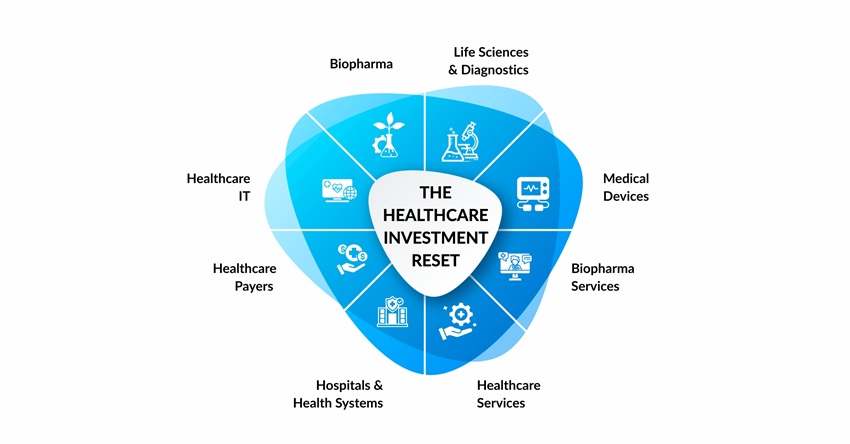
Across subsectors, this recalibration is visible:
Biopharma
With nearly USD 1.4 trillion in available capital, biopharma prioritized targeted acquisitions in the USD 10–15 billion range, focusing on oncology, CNS, and GLP-1 therapies. Venture funding gaps were partially filled by pharma-backed investment arms, while cross-border licensing, particularly with Chinese firms, increased. Pricing pressure remained a defining constraint.
Life Sciences & Diagnostics
Deal activity focused on advanced diagnostics, including genetic testing and advanced AI platforms offering predictive, personalized diagnostics. Investment continued in multiomics and single-cell analysis, with selective private equity participation in scalable, technology-driven platforms.
Medical Devices
More than 100 FDA approvals for AI-enabled radiology drove interest in imaging technologies. Portfolio consolidation centered on high-growth areas, while large transactions, such as the USD 18.3 billion take-private of Hologic, highlighted sustained investor confidence.
Biopharma Services
While deal volume declined, outsourcing demand remained strong across clinical trials, manufacturing, and commercialization. Investment targeted specialized CROs, advanced CDMOs, and data-driven platforms, alongside cold-chain and real-world evidence capabilities.
Hospitals & Health Systems
Deal activity slowed, with fewer large transactions. Providers focused on smaller acquisitions and partnerships to stabilize margins, expand outpatient services, and manage reimbursement and labor pressures.
Healthcare Services
The most active segment by deal volume, driven by consolidation across physician groups, post-acute care, and ambulatory settings. Demand for lower-cost, outpatient care models continued to shape investment priorities.
Healthcare Payers
Steady deal activity centered on cost control and analytics. Partnerships and portfolio optimization dominated, with increased AI use in operations alongside growing regulatory scrutiny.
Healthcare IT
Deal volume and value reached four-year highs, reflecting demand for automation, efficiency, and workforce support. Investment concentrated on scalable platforms across revenue cycle management, patient engagement, and home-based care.
This has changed the role of healthcare private equity. It has become an active force shaping platform strategies, accelerating consolidation, and influencing how care delivery models evolve.
The World Health Day 2026 Imperative
The 2026 World Health Day theme emphasizes three priorities: evidence-based decision-making, the One Health framework, and global collaboration.
For investors and operators, these priorities translate into operational requirements.
A science-led approach requires alignment with validated clinical outcomes and measurable impact. The One Health framework broadens the scope of healthcare investment, linking human health with environmental, agricultural, and biological systems. Global collaboration reflects the reality that healthcare innovation, supply chains, and disease patterns are increasingly transnational.
The expansion of private capital introduces a direct link between investment strategy and health outcomes. Private equity can improve efficiency, scale care delivery platforms, and accelerate the adoption of technology. It can also influence pricing structures, service availability, and geographic access.
The outcome depends on how investment strategies are designed.
Models that incorporate access, affordability, and clinical effectiveness into their value creation frameworks are better aligned with long-term demand drivers. Aging populations, rising chronic disease burdens, and workforce constraints are increasing the need for scalable, cost-efficient care delivery. In this context, health equity is not separate from financial performance. It is increasingly embedded within it.
This is where private equity in healthcare intersects directly with system-level outcomes.
Four Forces Defining the Deal Environment in 2026
The 2026 deal landscape is being shaped by four structural forces:
Resilience as a baseline requirement
Investors are prioritizing assets with strong data infrastructure, recurring revenue streams, and stable margins. Volatility in recent years has reinforced the need for predictable performance.
Focus on value realization
Both corporate and financial investors are preparing for improved exit conditions. This is driving earlier attention to operational improvements, margin expansion, and strategic positioning.
Shift toward consumer-oriented care
Care delivery is increasingly shaped by patient expectations, cost considerations, and digital access. Technology-enabled, decentralized models are gaining traction across multiple segments.
Global redistribution of innovation
Research and development capabilities are expanding beyond traditional markets. Emerging hubs are scaling quickly, creating new opportunities for cross-border investment and collaboration.
In addition to deal volume, these forces are influencing deal composition and intent.
The USD1 Trillion in Healthcare Realignment
By 2035, more than USD 1 trillion in global healthcare spending is projected to shift toward prevention, personalized medicine, home-based care, and digital ecosystems.
This transition will redefine value creation across the industry. Growth will concentrate on models that combine efficiency with accessibility and measurable outcomes. Healthcare IT will remain central to this shift, supporting clinical workflows, diagnostics, and patient engagement. At the same time, physician-led platforms and specialized service providers are evolving toward more integrated delivery models.
For investors, the implication is clear: value will be concentrated in assets that align with both cost efficiency and care accessibility.
M&A as a Tool for System Design
Mergers and acquisitions in 2026 are focused less on scale alone and more on capability building.
Transactions are targeting data integration, service expansion, and clinical specialization. Portfolio strategies increasingly include both acquisitions and divestitures, reflecting a more dynamic approach to asset management. Cross-border partnerships are becoming more common, driven by the global nature of innovation and supply chains. At the same time, advances in artificial intelligence are changing how diligence, integration, and performance tracking are conducted.
In this environment, healthcare private equity is influencing both market structure and care delivery models at a system level.
A Leadership Imperative
World Health Day serves as a point of evaluation for leadership teams across healthcare and investment organizations. Decisions related to capital allocation, operating models, partnerships, and portfolio construction directly affect access, affordability, and outcomes. Health equity is increasingly embedded in these decisions rather than treated as a separate initiative.
For executives, the implications are clear. Investment strategies that fail to account for access and system-level impact will face regulatory, operational, and reputational constraints. Those that integrate these considerations into core strategies are better positioned for long-term performance.
Private equity and health equity now intersect at the level of execution. How that intersection is managed will define both financial returns and system outcomes over the next decade.